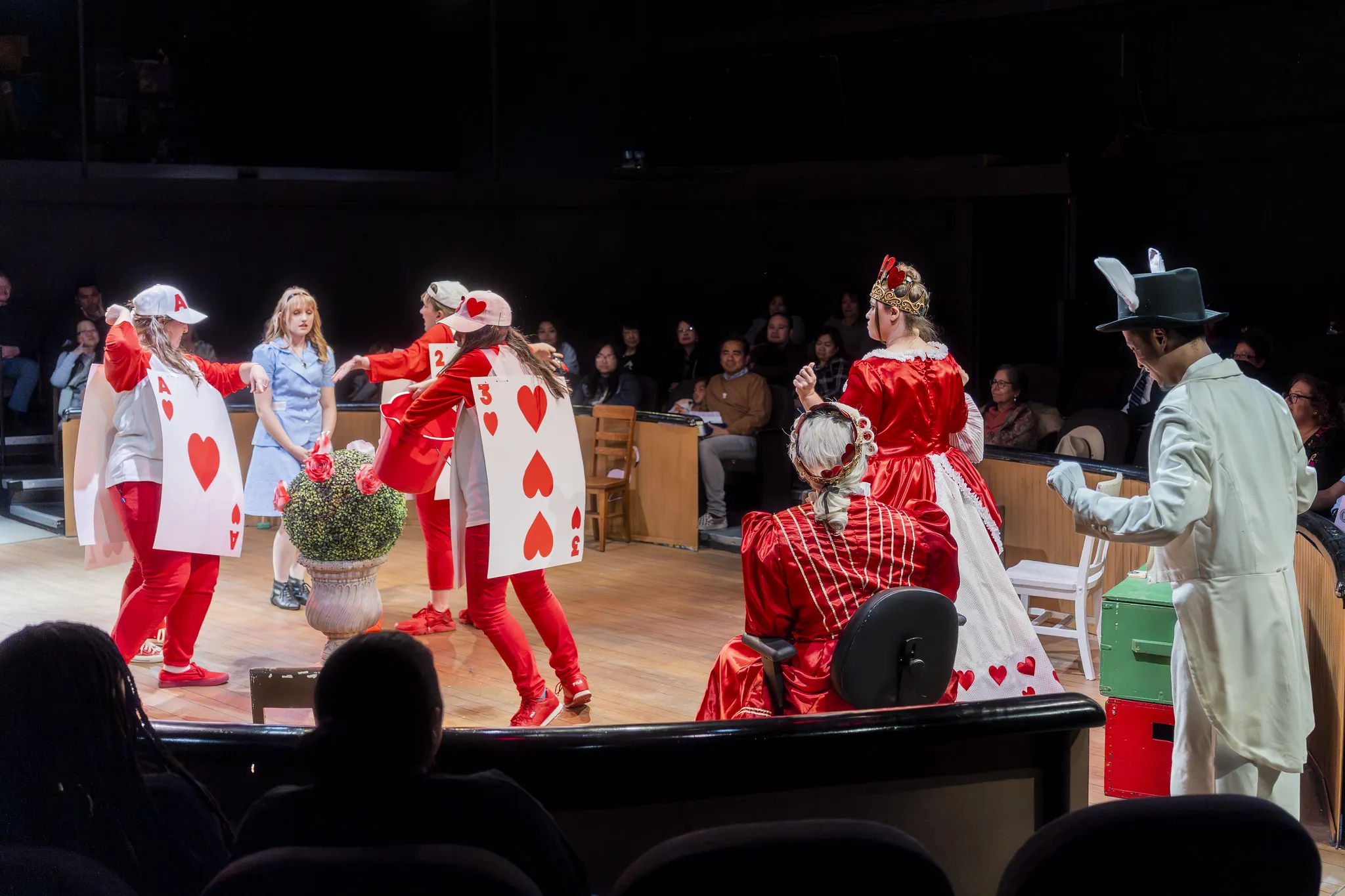
Alice’s Adventures in Wonderland has always been a strange creature to bring to the stage. Lewis Carroll’s 1865 novel is less a traditional narrative than a chain of surreal encounters. Characters appear, logic collapses, language twists itself into knots, and Alice wanders onward to the next absurd situation. Riverside Community Players’ current production leans into that structure, favoring a version of Wonderland that feels closer to Carroll’s book than the familiar Disney interpretation. The result is a playful, inventive staging that embraces the story’s chaos while grounding it in strong performances.
 Stephen Day
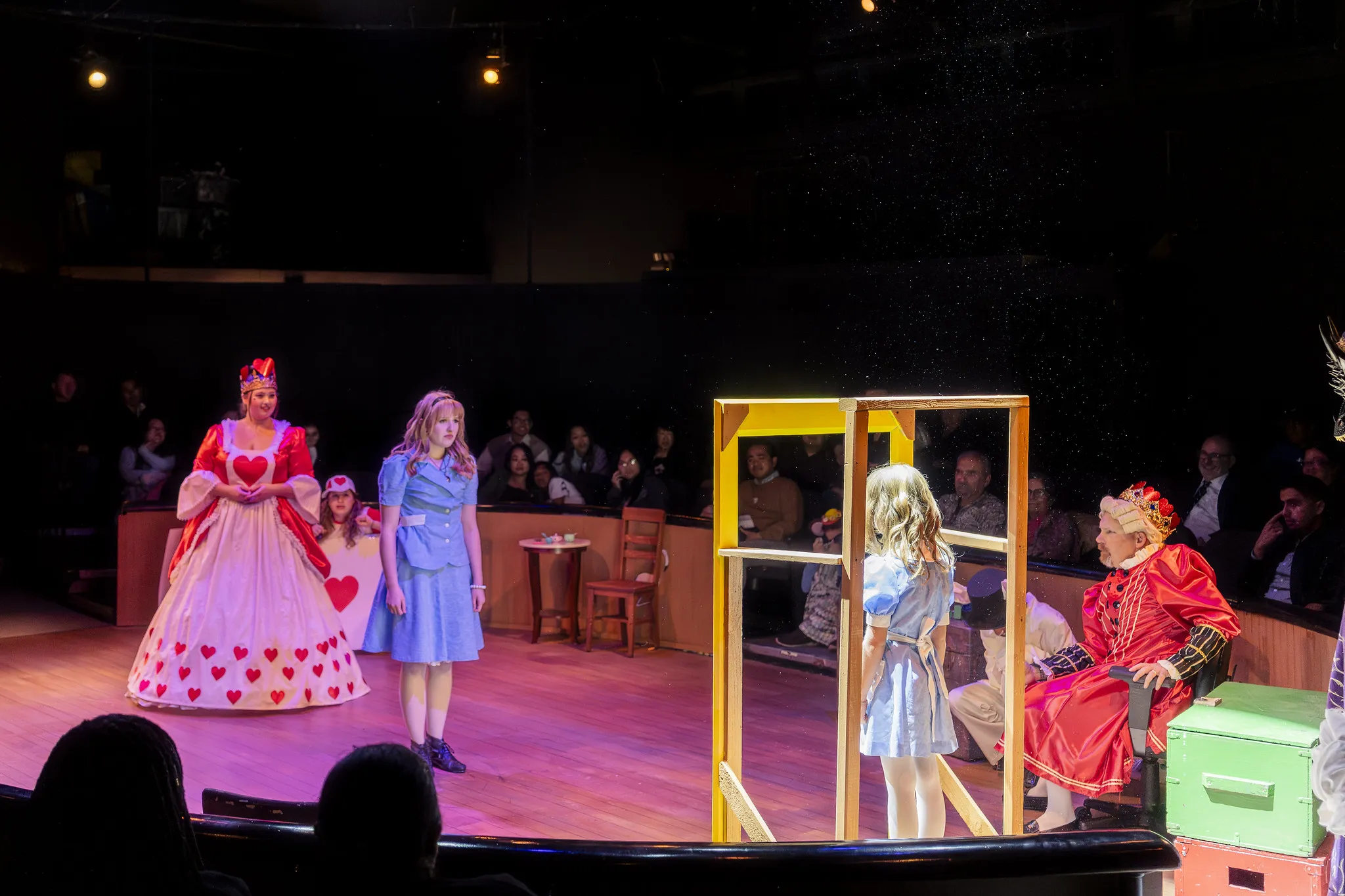
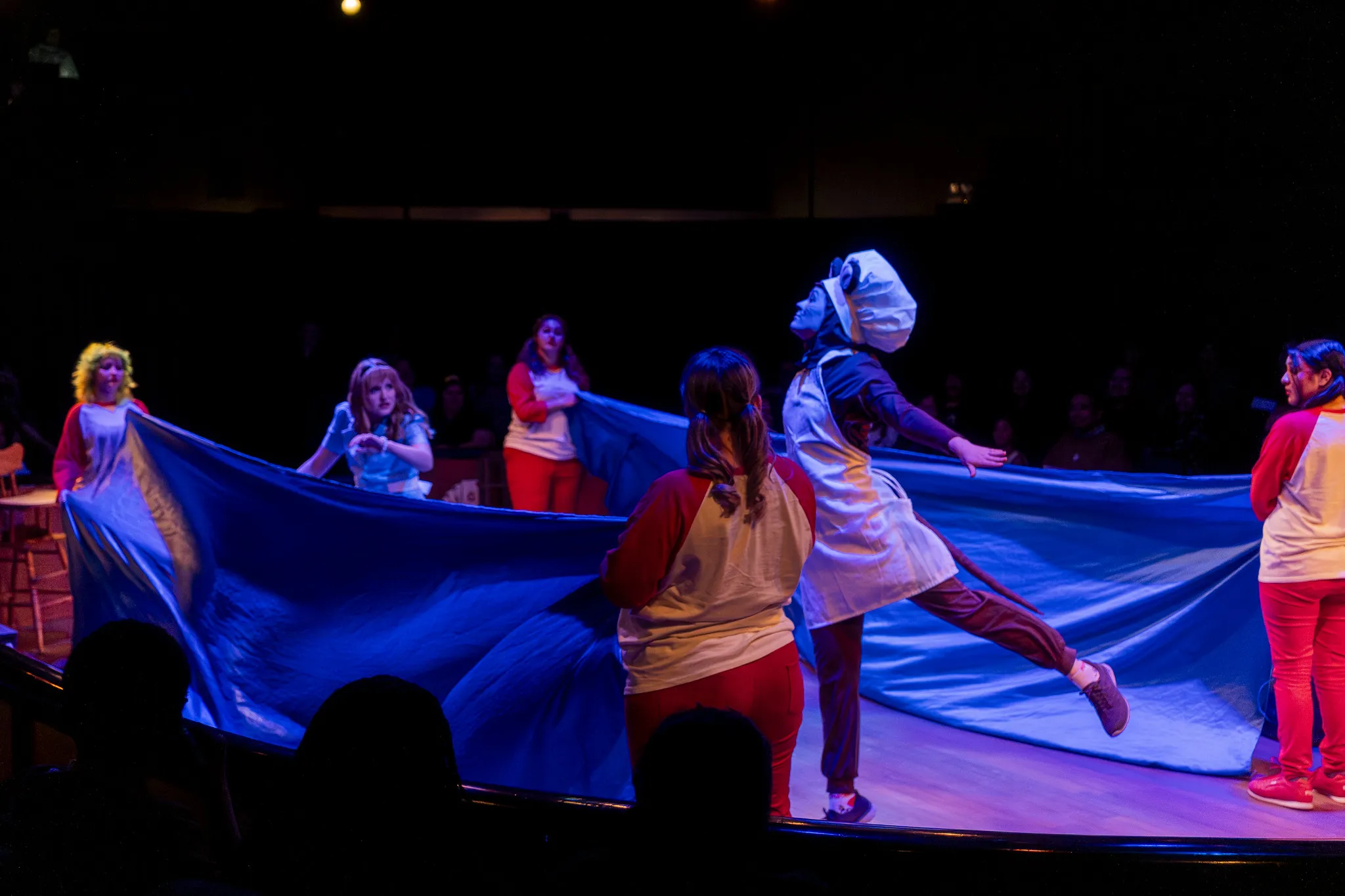
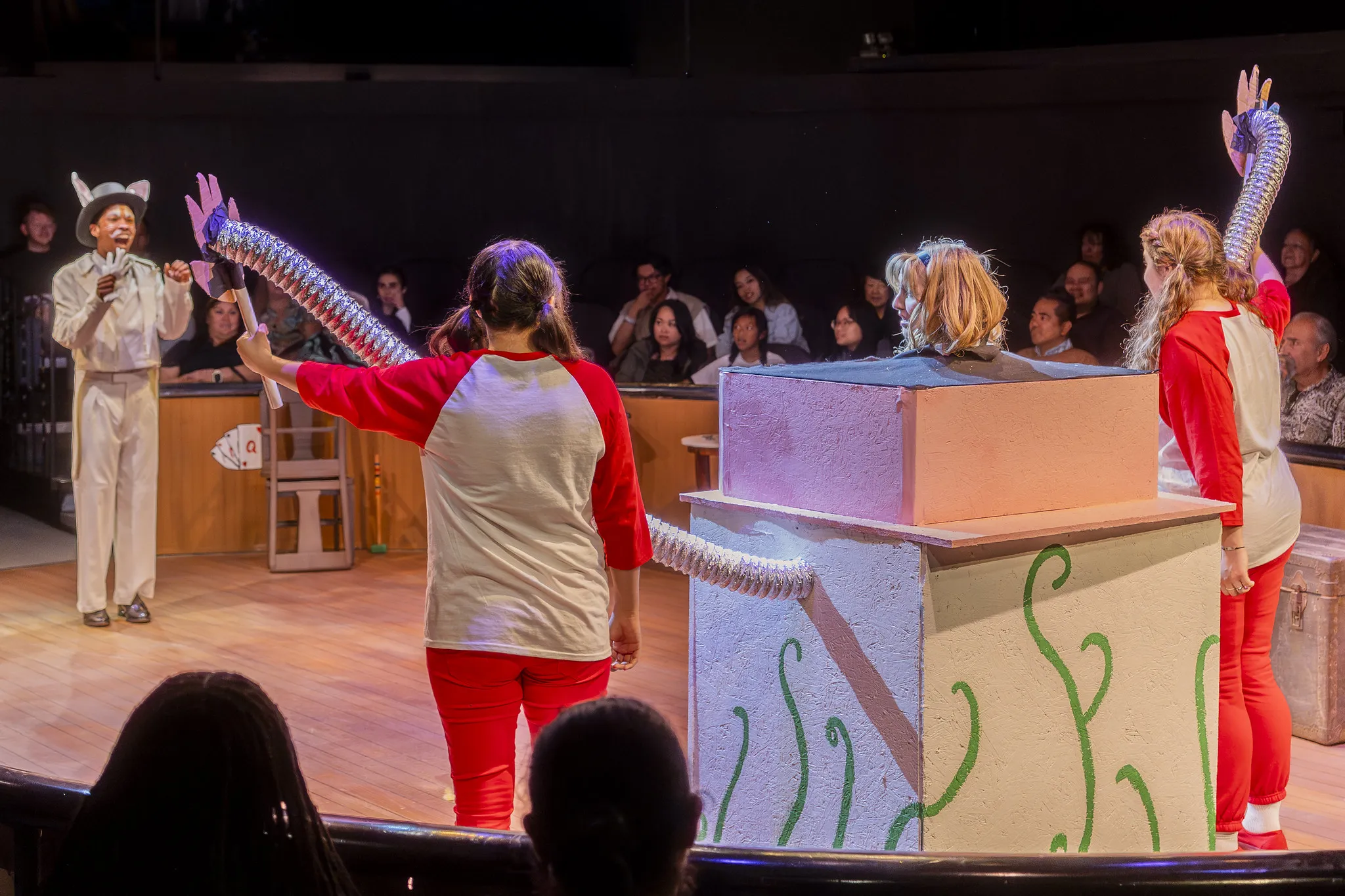
One of the most impressive elements of the production is the way it handles the constant shifts in size and scale that define Alice’s journey. Instead of relying on elaborate mechanical effects, the show uses a small ensemble of performers who act as living stage props. When Alice becomes tiny, a performer lifts a table overhead, suddenly transforming it into towering furniture. When she grows too large for the White Rabbit’s house, two performers frame a tiny doorway with their hands, instantly communicating the change in scale. Lighting cues help bridge these transformations, briefly dimming the stage and washing it in swirling, psychedelic color before the world snaps into its new proportions. The effect is simple but imaginative, allowing the audience’s imagination to complete the illusion.
 Stephen Day
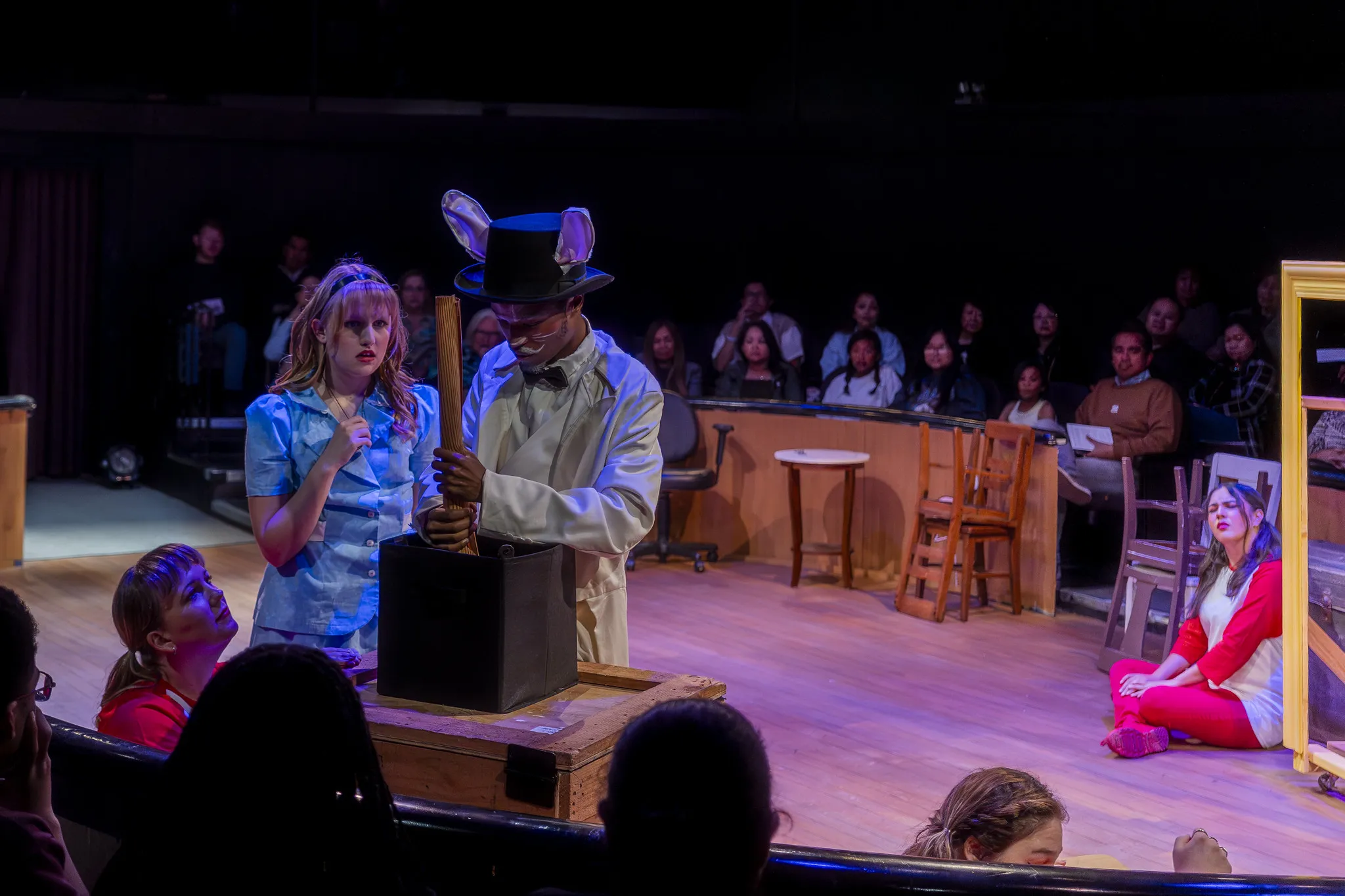
At the center of the production is a strong performance from the actor playing Alice, who captures the character’s shifting emotional landscape. Rather than portraying Alice as purely innocent, the performance leans into the character’s impatience and frustration as she confronts a world that refuses to follow any sensible rules. There is a touch of spoiled confidence in her early encounters, but as Wonderland grows stranger, that certainty gives way to visible anxiety and confusion. The constant sense of impermanence becomes part of the character’s arc, and the actor navigates that emotional transition with convincing energy.
 Stephen Day
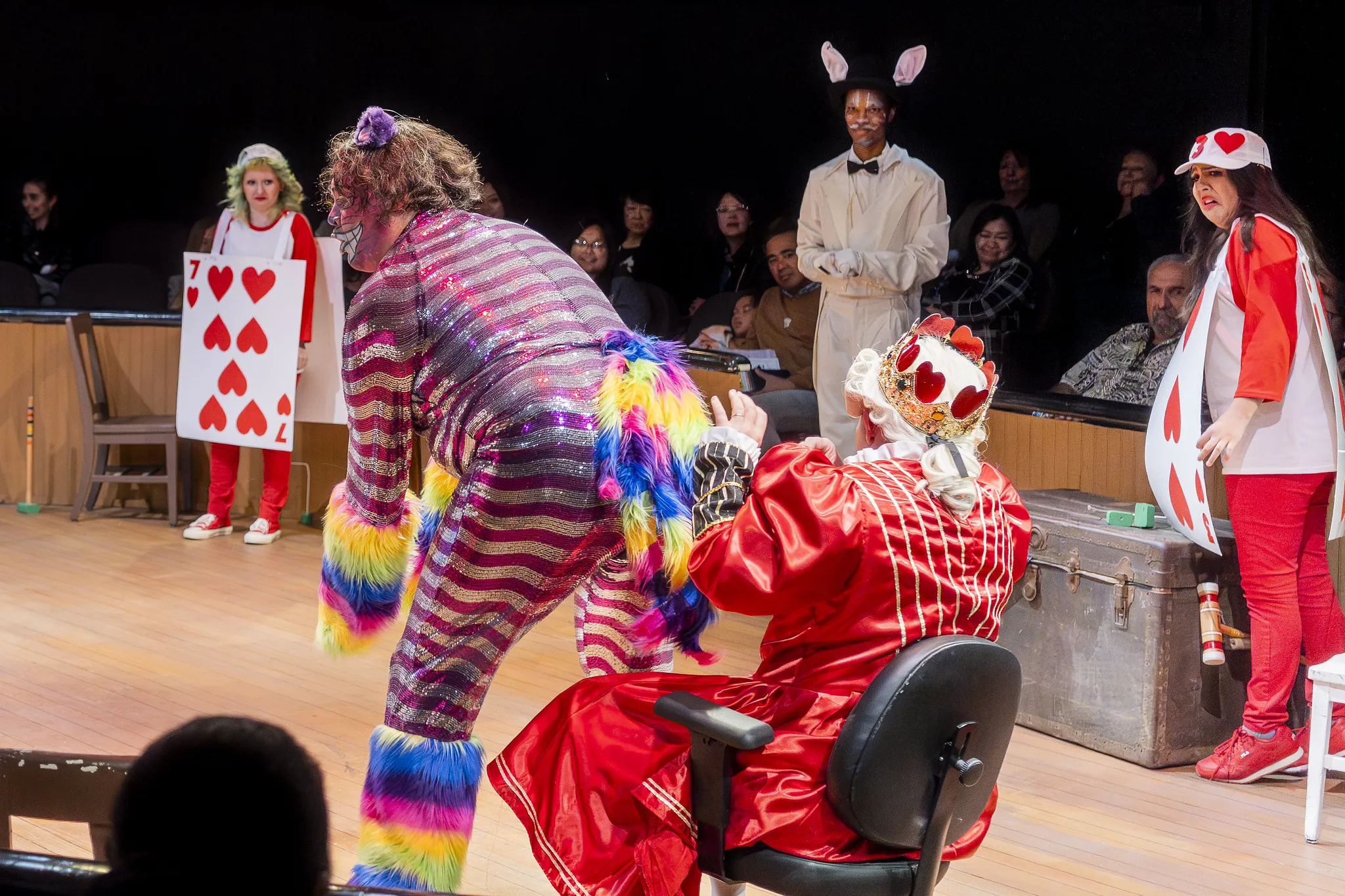
Several supporting performances stand out as well. The White Rabbit strikes an excellent balance between prim politeness and barely contained panic. The character’s constant urgency, paired with a slightly condescending sense of importance, makes every appearance feel both comedic and necessary to the story’s momentum.
 Stephen Day
Another highlight is DJ Hernandez, who takes on multiple roles throughout the production, including the Duck, the Cheshire Cat, and the Jabberwocky. The performance as the Cheshire Cat is particularly memorable. Through careful physical movement and an unsettling stillness at key moments, Hernandez creates a version of the Cat that feels playful but faintly eerie, circling Alice with an intelligence that suggests he understands Wonderland better than anyone else. The fact that the same actor can move between the comic absurdity of the Duck, the eerie calm of the Cheshire Cat, and the physical intensity of the Jabberwocky demonstrates impressive range.
 Stephen Day
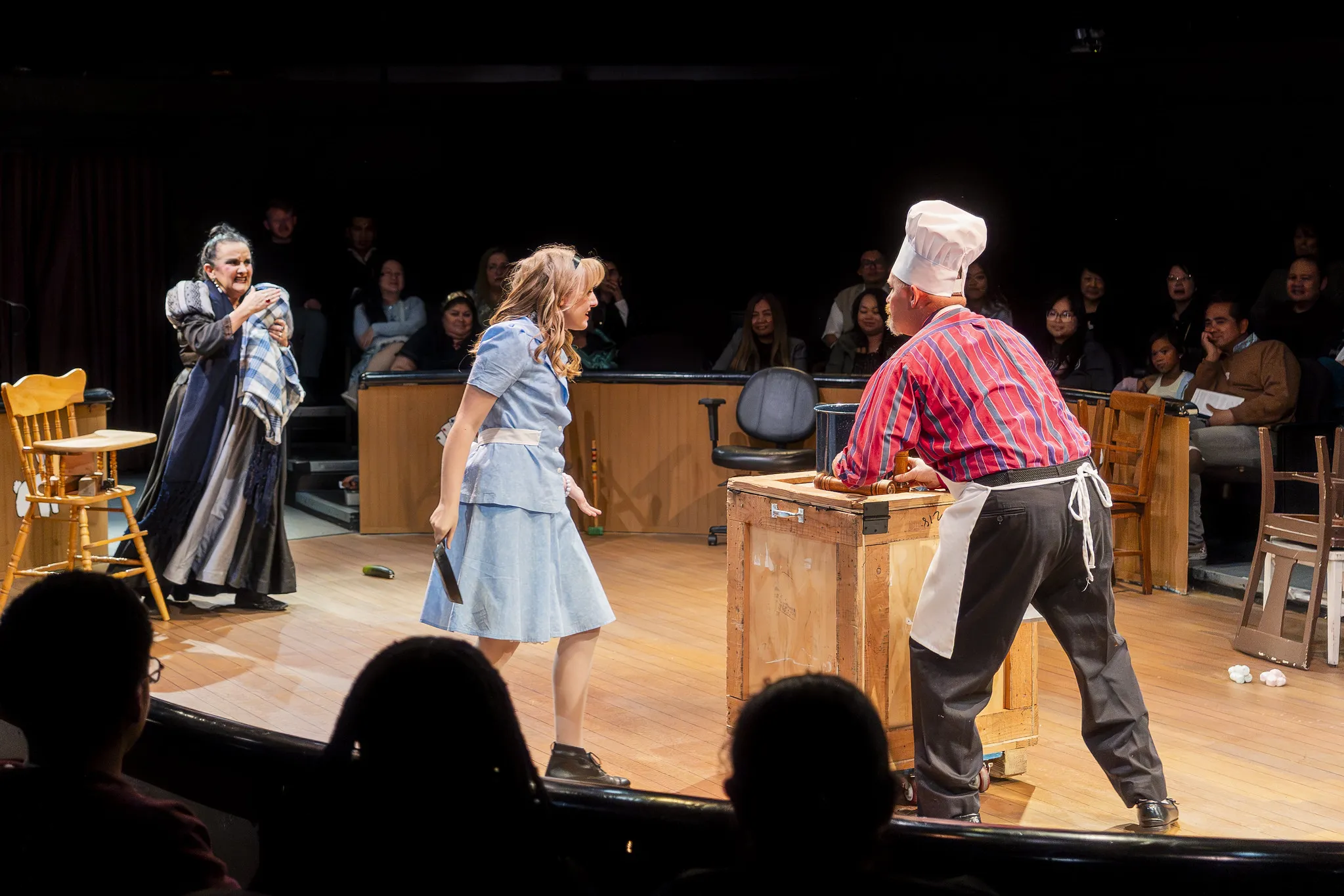
Even the smaller roles leave an impression. The Cook’s brief appearance becomes a standout comedic moment, thanks to a running gag in which the character repeatedly shouts out ingredients before inevitably ending with a triumphant “More pepper!” The escalating repetition builds laughter in the same way classic sketch comedy does, and the actor’s commitment to the bit turns a short scene into one of the evening’s biggest laughs.
 Stephen Day
Taken together, these performances and staging choices create a Wonderland that feels energetic, inventive, and true to the spirit of Carroll’s nonsense world. Rather than trying to recreate the story through elaborate spectacle, Riverside Community Players embraces the imaginative possibilities of live theater. With a strong ensemble and a willingness to let creativity drive the stagecraft, this production reminds audiences that sometimes the simplest illusions are the most magical.